The Ultimate Guide to Black Wedding Dresses
Black wedding dresses are no longer strange or rare. More and more brides in Europe and around the world are choosing deep black gowns for their wedding day. The colour feels strong, elegant, and very personal. It looks amazing in photos, works in many different places, and lets the bride show her real style instead of following old rules.
This long guide tells you everything you need to know about black wedding dresses. You will learn the true history and meaning of the colour, the main styles available today, the best fabrics and shapes, easy ways to style the look, practical tips for different seasons and European venues, advice for every body type, common worries, and clear answers to popular questions. Whether you want a dramatic gothic gown, a clean modern shape, or a soft romantic black lace dress, this guide will help you feel ready and confident.
The advice focuses on European tastes and places — UK countryside barns, French châteaux, Italian villas, Scandinavian simple spaces, and old historic churches — but it works for brides anywhere.
The History and Meaning of Black Wedding Dresses
White became the usual bridal colour after Queen Victoria wore it in 1840. Before that time, brides in Europe simply wore their best dress in any colour they liked. Black was a respected and traditional choice in several places.
In parts of Scandinavia and Spain, black once meant devotion, seriousness, and the important promise of marriage. In the 14th century, black clothes showed that someone was important because the dye was expensive and hard to make. Over time, the meaning changed again. Today, modern brides choose black because it feels strong, mysterious, elegant, and true to who they are. It is no longer mainly seen as a colour of sadness. Instead, it stands for individuality, quiet power, and lasting style.
Wearing a black wedding dress is a personal choice. It shows that the bride cares more about being herself than following strict tradition. When the gown uses classic bridal fabrics such as lace, tulle, or structured satin, and has details like a train or soft veil, it still looks clearly like a wedding dress and not just an evening dress.
Why More Brides Are Choosing Black Wedding Dresses
There are clear reasons why black wedding dresses are becoming more popular:
- Personal expression – many brides simply feel more like themselves in black than in white or ivory.
- Photography – black creates strong contrast and looks dramatic in both natural daylight and soft evening candlelight.
- Versatility – the colour works for gothic, modern, romantic, minimalist, or mixed-style weddings.
- Second looks – some brides wear a lighter colour for the ceremony and change into black for the party.
- Seasonal suitability – black feels especially natural for autumn, winter, and evening celebrations.
Fashion shows and famous weddings have helped make the choice normal. Designers now offer black bridal collections as a regular option, not something unusual. In European cities and countryside places, guests and families are getting used to seeing confident black bridal looks.
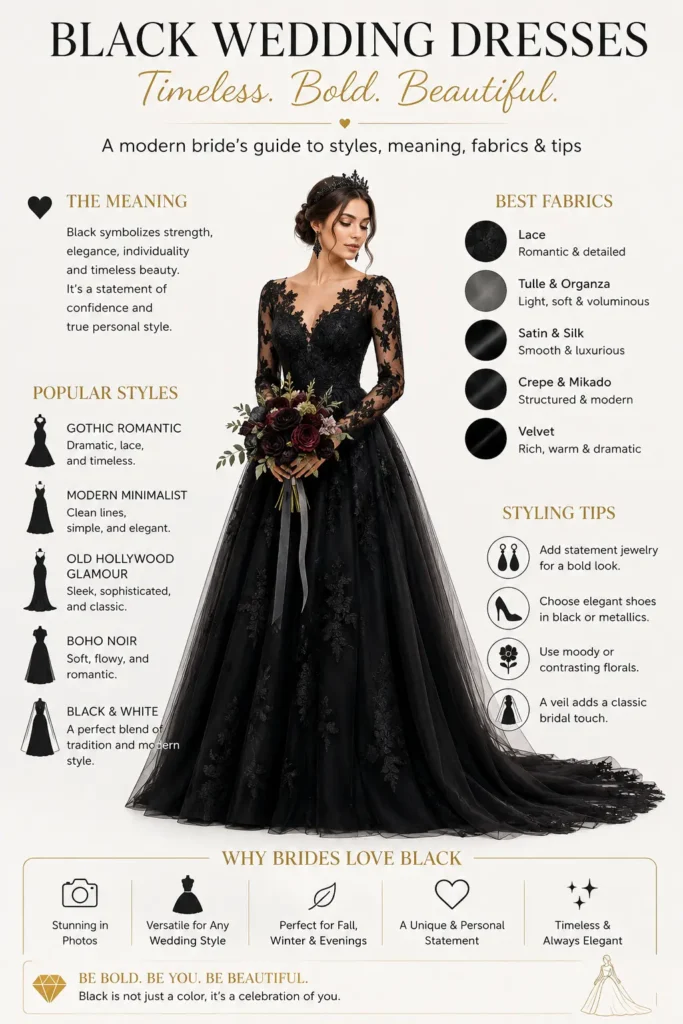
Main Styles of Black Wedding Dresses
Black works with almost every classic bridal shape. Here are the main styles that are popular right now:
Gothic Romantic
Heavy lace, structured corsets, many layers of tulle, long trains, and strong details. This style is perfect for old historic places, evening ceremonies, rooms with candlelight, or themed celebrations. It creates a strong and memorable look.
Modern Minimalist
Clean lines, heavy crepe or mikado, simple architectural shapes, and very little decoration. Ideal for city halls, modern galleries, industrial spaces, or brides who like understated elegance.
Old Hollywood Glamour
Body-skimming silk or satin, soft folds, small sequins, or velvet details. This look feels elegant and like a film star, especially in formal ballrooms or evening parties.
Boho Noir
Soft flowing chiffon, gentle lace, bell sleeves, and dark flower Embroidery. It suits outdoor, forest, garden, or relaxed countryside settings and gives a softer, more romantic version of black.
Black and White Combinations
Gowns that mix black lace, flower details, or panels with an ivory or white base. These styles create a gentle link between traditional expectations and modern personal taste.
Best Fabrics for Black Wedding Dresses
Fabric choice is very important with black because the colour absorbs light. Texture and surface finish create depth, movement, and interest.
- Lace (especially Chantilly or Guipure) – romantic, detailed, and clearly bridal.
- Tulle and organza – soft movement, volume, and a lighter feeling.
- Satin and silk – smooth, luxurious, and flowing.
- Crepe and mikado – structured, modern, and excellent for clean lines.
- Velvet – rich, deep, and perfect for cooler months or evening events.
- Sequins or subtle beading – quiet sparkle that catches light without looking like a costume.
A good lining is essential. Thin or poor lining can make the dress feel heavy, stick in the wrong places, or become uncomfortable during a long day.
Silhouettes That Work Beautifully in Black
Black creates clean, clear lines and flatters many body types when the shape is chosen carefully.
- A-line – balanced, comfortable, and flattering for almost everyone.
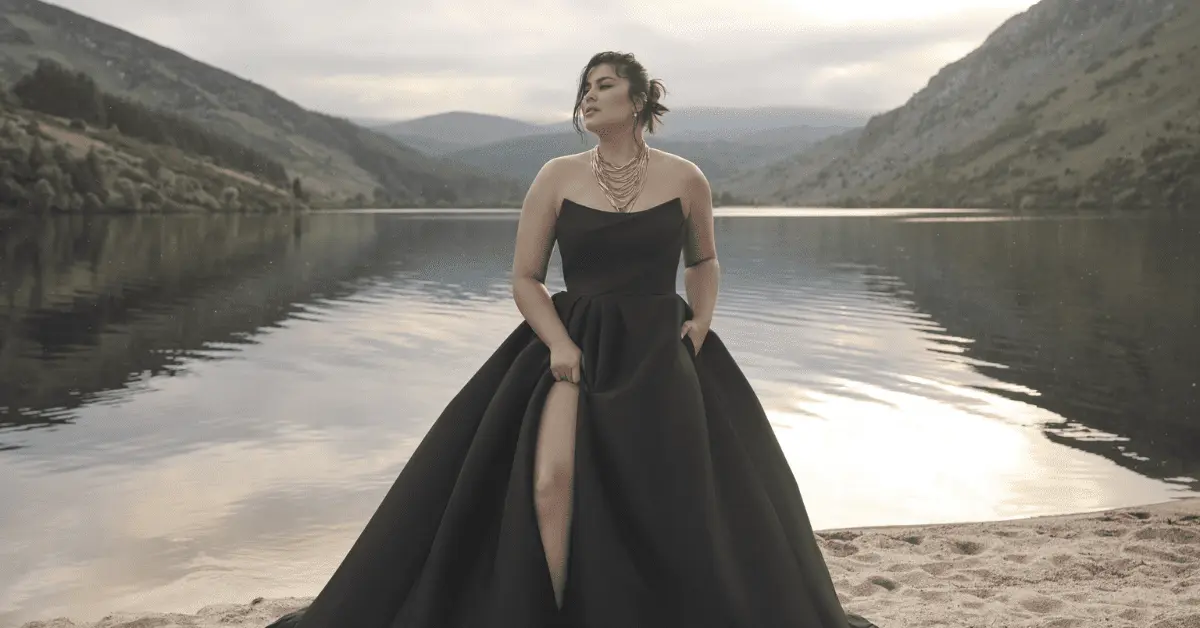
- Ball gown – dramatic volume and a royal feeling.
- Mermaid or trumpet – follows the curves and then opens for movement.
- Sheath or column – sleek, modern, and elegant.
- Tea-length or shorter styles – practical for daytime ceremonies or changing for the party.
Professional alterations matter more with black than with lighter colours. The dark shade shows every fold and seam, so a precise fit keeps the whole look neat and intentional.
How to Style a Black Wedding Dress
Accessories turn a black evening-style gown into a true bridal look. Careful choices create balance and softness.
Jewellery
Silver, pearls, or clear crystals give a cool contrast. Gold adds warmth and richness. Keep the size balanced so the dress stays the main focus.
Veils and Headpieces
A black veil is dramatic and matches well. An ivory, soft grey, or champagne veil softens the overall effect. Flower crowns, pearl pins, simple combs, or delicate hair vines also work nicely.
Bouquets
Deep reds, burgundy, white anemones, dark leaves, soft pastels, or quiet jewel tones pair beautifully. Very bright neon colours can clash and are best avoided.
Shoes and Bags
Classic black, metallic, or deep jewel-tone shoes keep the look together. A small structured clutch or elegant evening bag finishes the outfit without adding bulk.
Makeup and Hair
Soft, glowing skin stops the overall look from feeling too heavy. Berry, plum, or classic red lips go well with black. Hair can be sleek and neat, soft waves, or romantic updos, depending on the gown style and place.
Matching Black Wedding Dresses to Venue and Season
Autumn and Winter
Velvet, heavy lace, or structured satin feel natural and right for the season. Historic venues, rooms with candlelight, libraries, and outdoor settings with leaves or soft lighting work especially well.
Spring and Summer
Lighter tulle, chiffon, or organza keeps the dress more comfortable in warmer weather. Choose places with strong buildings or plan an evening ceremony so the colour does not feel heavy under the bright midday sun.
European Venue Ideas
- UK countryside or barns – soft lace or flowing styles that move easily outdoors.
- French châteaux – structured ball gowns or elegant column shapes that match the grand feeling.
- Italian villas or vineyards – fluid shapes with romantic details.
- Scandinavian or modern spaces – clean, simple shapes that suit plain architecture.
- Gothic or historic churches – dramatic lace, long trains, and strong presence.
Inclusivity and Fit Considerations
Black wedding dresses come in a wide range of sizes. Structured tops give support, while A-line and soft skirts offer comfort and easy movement. Petite brides often prefer more streamlined shapes so the dark fabric does not overwhelm a smaller frame. Plus-size brides benefit from good internal structure and careful tailoring. Options for maternity with empire waists or soft stretch fabrics also exist. The most important thing is choosing a shape that feels comfortable and confident on your body.
Common Concerns and Myths
Is a black wedding dress bad luck?
No. Historical European traditions sometimes used black for positive and respectful reasons. The modern choice is about personal style, not old superstition.
Will it look like a funeral dress?
Not when the fabric, shape, and styling are bridal. Lace, tulle, trains, soft veils, and thoughtful accessories make a clear difference.
What will the family think?
Many families become happy once they see the complete look with hair, makeup, and accessories. Some brides choose a white or ivory dress for the ceremony and change into black for the party as a gentle way to introduce the colour.
Does black photograph well?
Yes. It creates strong contrast and works especially well in the evening or in soft lighting. A photographer who knows how to work with dark fabrics will handle the light correctly.
Pros and Cons
Pros
- Strong personal expression and real confidence
- Excellent photos in both day and evening light
- Works across many styles, seasons, and places
- Feels modern, fashion-forward, and special
- Can often be worn again or restyled for other formal events
Cons
- May need extra talk with more traditional relatives
- Takes in heat, so fabric weight matters for outdoor summer events
- Needs careful accessories so the look stays clearly bridal
- A few very traditional places or cultures may still prefer lighter colours
Comparison Table
| Style | Best For | Key Fabrics | Venue Suitability | Overall Feel |
| Gothic Romantic | Drama and evening | Lace, tulle, corsetry | Historic, candlelit, themed | Mysterious and regal |
| Modern Minimalist | City and contemporary | Crepe, mikado, satin | Urban, clean architecture | Sleek and powerful |
| Old Hollywood | Formal glamour | Silk, velvet, sequins | Ballrooms, evening events | Elegant and cinematic |
| Boho Noir | Outdoor and relaxed | Chiffon, soft lace | Forests, countryside, gardens | Soft and romantic |
| Black & White Mix | Bridge between traditions | Lace, tulle, appliqué | Most venues | Balanced and unique |
Expert Tips for Choosing and Wearing a Black Wedding Dress
- Start with your everyday style — the dress should feel like a nicer version of the clothes you already love.
- Focus on texture — lace, tulle, or structured fabrics help the gown look bridal.
- Plan the full look early — bouquet, jewellery, veil, and shoes should work together as one story.
- Think about a second dress — many brides enjoy both a lighter ceremony look and a black party gown.
- Book a photographer who has experience with dark fabrics and contrast lighting.
- Try the dress in both natural daylight and evening light before deciding.
- Focus on a precise fit — black shows every detail of the shape, so professional alterations are worth it.
Common Mistakes to Avoid
- Choosing a flat, evening-style fabric without bridal details such as lace or a train.
- Ignoring the season and picking heavy velvet for a hot outdoor summer ceremony.
- Adding too many accessories so the overall look becomes busy instead of elegant.
- Forgetting to talk calmly with close family if tradition is important to them.
- Selecting a shape that feels uncomfortable after several hours of wearing.
- Looking only at store lighting — always check the dress in natural light as well.
Budget-Friendly and Luxury Approaches
A beautiful black wedding dress does not need the highest budget. Focus first on fabric quality and fit. Mid-range options with good lace, tulle, or structured crepe often look and photograph as well as more expensive pieces when the shape is right. Luxury approaches focus on exceptional fabric, detailed handwork, and perfect tailoring. Many brides also look at carefully chosen second-look gowns or pre-owned options as a practical and kind-to-the-planet route. The most important investment is usually alterations so the final fit is exact.
Cultural Notes Across European Regions
In the United Kingdom and Ireland, black bridal gowns appear more often at countryside, evening, or alternative-style celebrations. In France, structured and elegant shapes in black feel natural in a château or formal settings. Italian weddings sometimes favour soft, romantic interpretations. Scandinavian preferences lean toward clean, simple shapes. Historic churches and Gothic architecture across Central Europe give dramatic backgrounds that enhance black lace and trains. Across all regions, the shared idea is the same: the dress should feel true to the bride and respectful of the whole celebration.
FAQs
Yes. They are increasingly common and fully accepted at modern weddings across Europe and beyond.
Today, it mainly represents individuality, elegance, power, and personal authenticity rather than mourning.
Yes, especially if the fabric is lighter (tulle or chiffon) and the venue has strong visual interest or architectural character.
Choose classic bridal elements such as lace, trains, soft veils, and structured silhouettes. Soft makeup and thoughtful accessories complete the look.
Yes, with the right fabric. Lightweight tulle or organza is more comfortable than heavy velvet or satin in warm weather.
Conclusion
A Black Wedding Dress is a confident and beautiful choice for the modern bride. It carries an interesting history, offers a strong visual impact, and allows full personal expression. When the fabric, shape, and styling are chosen with care, the result feels elegant, intentional, and clearly bridal.
Whether you are drawn to dramatic lace, clean modern lines, soft romantic details, or a balanced black-and-white combination, black can be adapted to almost any wedding vision. Focus on quality fabric, precise fit, and the overall atmosphere you want to create. Then walk down the aisle feeling yourself completely.