The Ultimate Guide to Fall Wedding Guest Dresses
Autumn has turned into one of the most Cherished periods for nuptials throughout Europe and across the globe. The atmosphere grows cooler. Sunlight shifts into a golden glow. Foliage transforms into rich crimsons, gentle ambers, and mossy greens. This produces a cozy and romantic mood that countless couples adore.
Yet selecting attire as an attendee is seldom straightforward. Climatic conditions can shift rapidly. Ceremonies frequently begin outdoors and transition indoors. Attire expectations vary widely. You desire to appear polished and comfortable without diverting focus from the pair.
This extensive resource serves anyone attending an autumn celebration. It applies to a rustic barn in the English countryside, a grand château in France, a vineyard setting in Italy, a lakeside location in Scandinavia, or an urban hall anywhere. You will discover the finest fall wedding guest dresses, suitable hues, optimal materials, appropriate forms for diverse occasions, simple methods to add layers, guidance for each month, and ways to sidestep frequent errors. The aim remains clear. You will arrive appearing refined, feeling at ease, and prepared to savor the occasion.
Understanding Fall Wedding Dress Codes
The invitation stands as the primary item to examine. Autumn nuptials differ greatly. Some remain relaxed open-air gatherings. Others become formal nighttime affairs. Across Europe, hosts frequently convey expectations through subtle signals alongside explicit wording.
For casual or dressy casual celebrations, select midi or tea-length garments. Soft knits, mild autumn blossoms, or refined jumpsuits prove suitable. Boots or sturdy block heels suit grass or gravel surfaces well.
For cocktail or semi-formal gatherings, opt for richer materials such as satin, crepe, or light velvet. Midi or cocktail lengths prove ideal. Sleeves or a light overlying piece remain welcome and frequently useful as temperatures cool.
For formal or black-tie optional events, select floor-length gowns or smart midi garments in jewel tones or deep neutrals. Both structured and fluid forms appear appropriate.
True black-tie occasions generally require floor-length gowns crafted from special materials like velvet, silk satin, or fabrics featuring subtle attractive details.
Should the attire expectation remain unclear, select something slightly more formal. You can always remove a jacket or wrap afterward. In numerous European celebrations, understated refinement surpasses bold dramatic statements, particularly at family-oriented or rural events.
Quick tip: Examine the invitation twice. Review venue images if the pair shares them. This assists in selecting the correct attire level.
Best Colors for Fall Wedding Guest Dresses
Hue ranks among the simplest methods to appear suitable for the season. Autumn favors robust, warm, and profound shades that align with trees and gentle evening illumination.
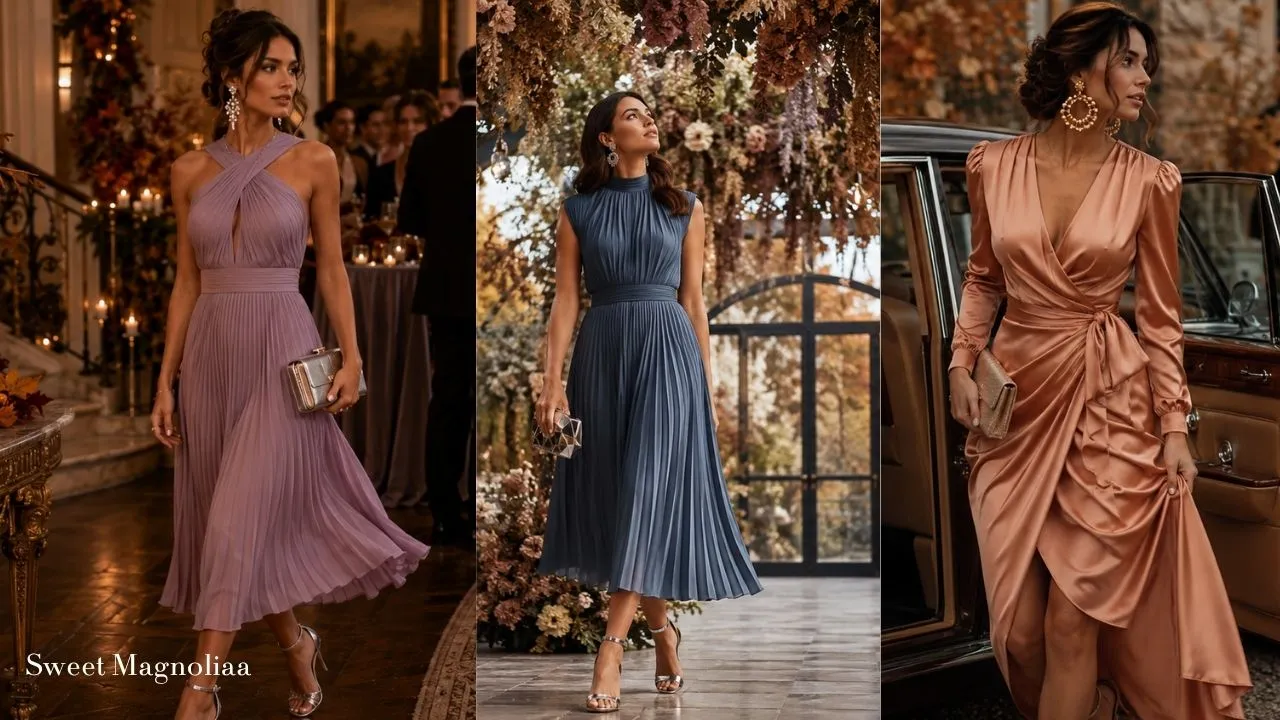
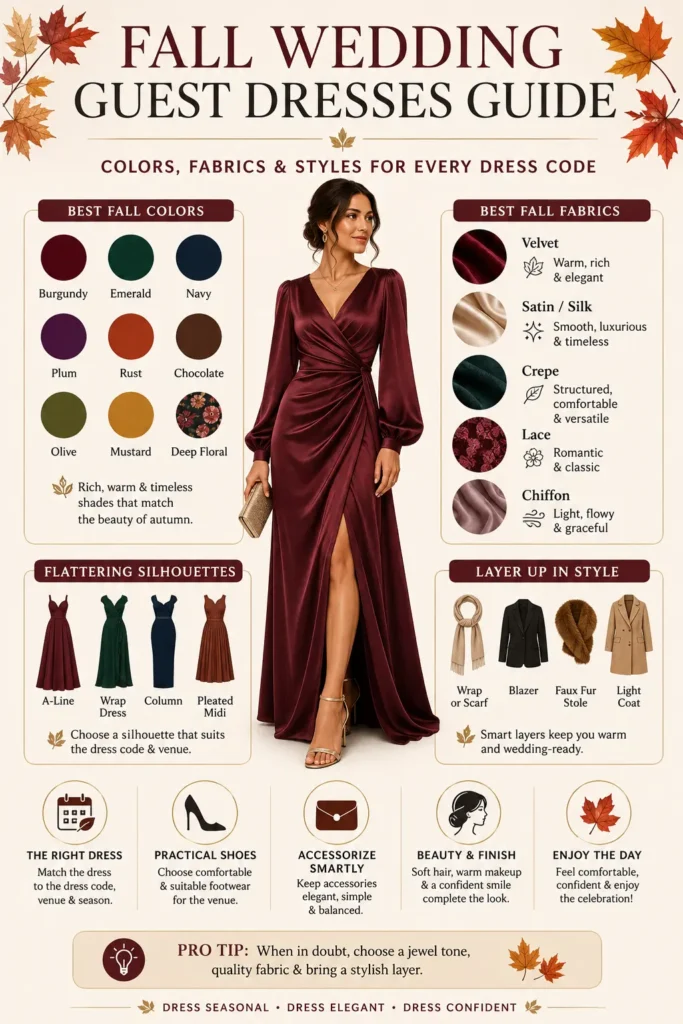
Jewel tones form the strongest selection. Consider burgundy and wine, emerald and forest green, deep navy, plum and amethyst, plus rich sapphire. These shades appear stunning in images and feel ideal for autumn.
Earthy and warm neutrals also perform effectively. Attempt terracotta, rust, chocolate brown, camel, mustard, and olive. These milder shades excel for daytime or outdoor celebrations.
Soft metallics such as gold, bronze, or copper introduce a quiet gleam for nighttime events. Exercise caution with champagne so it avoids resembling bridal coloring.
Dark florals represent another solid option. Select botanical prints on navy, black, burgundy, or deep green backgrounds. They convey romance yet remain appropriate for autumn.
Steer clear of pure white or ivory. These shades belong exclusively to the pair. Extremely pale pastels can appear faded against autumn foliage. Bright neon or intense summer hues typically feel mismatched for the season.
Align the intensity of the hue with the time of day. Lighter jewel or earth tones frequently suit daytime outdoor ceremonies. Deeper shades appear more polished for evening gatherings or indoor spaces. In many European nations, attendees also attempt to coordinate with the celebration’s primary hues when the pair reveals them. Select shades that complement the event rather than conflict with them.
Example: At a vineyard celebration in Italy during October, a rust or deep green midi garment will appear natural against grapevines and golden illumination. At a formal evening event in a German castle, a deep navy or plum gown will convey elegance and suitability.
Best Fabrics and Textures for Fall
Material proves equally significant as hue. Autumn temperatures can vary substantially between the ceremony and the gathering. Select mid-weight materials possessing some substance and comfortable to wear.
Velvet provides immediate autumn refinement. It suits cooler evenings and formal occasions perfectly.
Satin and silk charmeuse possess a gentle flow. They move attractively in images and suit numerous attire expectations.
Crepe feels structured yet remains comfortable. It maintains its form throughout the day.
Heavier chiffon or georgette (with lining) handles shifting weather and permits easy movement.
Lace overlays or mixed materials appear romantic when executed in deeper hues rather than light summer versions.
Knit or ponte materials suit casual or daytime gatherings and supply additional warmth in cooler regions.
Avoid extremely thin summer chiffons. They can feel fragile and chilly when temperatures decline. The finest fall wedding guest dresses blend attractive appearance with genuine comfort.
Practical tip: Grasp the material in your hand. If it feels excessively light and transparent, it may not perform well on a cool autumn day. Mid-weight materials that drape gently usually represent the safest selection.
Silhouettes and Styles by Formality, Venue, and Month
The form of your garment should accommodate both the formality and the location.
For casual celebrations, select flowy midis, wrap styles, or soft tiered garments. These produce an effortless and graceful presence.
For cocktail and semi-formal events, attempt fitted or soft tailored midis, drop-waist styles, or elegant one-shoulder and off-shoulder necklines.
For formal and black-tie celebrations, column, A-line, or gently structured floor-length gowns perform best. Statement sleeves or attractive necklines can introduce interest without excess.
Venue category also influences the selection. Outdoor, barn, vineyard, or mountain settings require practical hemlines. Choose midi or maxi lengths that will not trail on the ground. Closed or block-heel footwear proves safer. Layers assist with temperature variations. Rich earth and jewel tones appear especially appealing against leaves and trees.
Indoor ballrooms or urban venues permit more dramatic forms and minor additional details.
Garden or early-autumn outdoor events still welcome dark florals or lighter jewel tones while remaining seasonal.
Month-by-month guidance clarifies selections further:
- September frequently remains mild. Lightweight materials, short sleeves, or sleeveless styles paired with a wrap perform well.
- October represents peak foliage season in numerous regions. Mid-weight materials and the introduction of long sleeves or smart layers grow more common.
- November turns cooler. Velvet, long sleeves, richer textures, and stronger outer layers excel.
Popular forms that currently perform effectively include drop-waist and gently pleated styles, one-shoulder or asymmetric necklines, small elegant cutouts, soft ruffles, and column or softly flared maxis. These forms feel contemporary yet remain respectful.
Example: For an outdoor October celebration in the English countryside, a mid-weight crepe midi in forest green with a soft wrap and block heels will appear polished and practical. For a formal November event in a French château, a velvet floor-length gown in deep burgundy will feel rich and appropriate for the cool evening.
European Perspectives on Fall Wedding Guest Style
European autumn celebrations frequently prioritize quiet refinement, superior material quality, and harmony with natural surroundings.
In the United Kingdom and Ireland, countryside and barn events favor practical yet refined midis in earthy or jewel tones. Elegant boots or wraps remain common.
French gatherings, whether in a château or rural setting, incline toward soft and sophisticated movement. Satin or crepe gowns in deep tones feel polished without ostentation.
Italian vineyard or lakeside celebrations often welcome warmer earth tones and materials that move gently.
Scandinavian and Northern European events prefer clean lines, rich yet restrained hues, and excellent layering. This aligns with both the cooler climate and a preference for quiet luxury.
German and Central European formal events may favor more structured forms.
Spanish or Southern European autumn gatherings can still permit slightly more warmth and flow, depending on local weather.
Across all these locations, the core principle remains Identical. Respect the pair and the setting. Attendees generally avoid anything that competes with the bridal party or appears overly theatrical. Superior material and thoughtful hue selection frequently matter more than the newest trend.
How to Style and Layer for Variable Fall Weather
Temperatures can decline 10–15°C or more between the outdoor ceremony and the indoor gathering. A straightforward layering approach resolves most difficulties.
Essential items include:
- A lightweight silk or fine cashmere wrap or scarf
- A structured blazer or cropped jacket that removes easily
- A velvet or soft faux-fur stole for formal evenings
- An elegant cardigan or light coat that can remain at the coat check
These layers should complement the garment rather than conceal it.
Footwear must prove both attractive and practical. Closed-toe or peep-toe pumps, refined boots for rustic locations, or block heels capable of handling grass and gravel remain reliable. Retain a foldable flat in your clutch for later dancing.
Accessories perform optimally when kept simple. Select either statement earrings or a bold necklace, not both. Gold, bronze, or silver metallics coordinate well with autumn hues. A structured clutch or small shoulder bag completes the appearance without adding bulk.
Hair that remains tidy in a light breeze proves helpful. Soft waves, low chignons, or polished updos perform effectively. Warm makeup featuring berry lips and soft definition around the eyes appears lovely in autumn illumination.
Step-by-step styling plan:
- Select the garment first according to attire expectations and venue.
- Choose one primary layer matching the hue and formality.
- Add simple jewelry and a practical bag.
- Test the complete ensemble, including footwear, while walking and sitting.
- Pack a small emergency kit containing fashion tape and blotting papers.
Budget Considerations and Approach to Shopping
Consider value and the number of occasions you can reuse the garment. Many attendees prefer versatile pieces in classic jewel tones or deep neutrals. These can appear at multiple events or later as evening attire.
Mid-range quality materials and careful construction frequently appear and feel superior to the least expensive options, particularly in images and throughout a lengthy day. For single formal occasions, rental services represent a smart and sustainable selection in numerous European cities and beyond.
Luxury selections emphasize exceptional material, precise fit, and timeless form. These pieces feel special for the day yet can be worn again with altered styling. The optimal strategy involves determining formality and setting first, then selecting the best material and hue within your personal range.
Inclusivity
The most refined attendee is the individual who feels comfortable and confident. Seek styles offering extensive size ranges, petite and tall options, and thoughtful construction. Empire or gently defined waistlines, stretch materials, adjustable elements, and solid support for varying bust sizes all contribute to a flattering outcome. Modest necklines and sleeve options remain readily available for those who prefer them.
Maternity attendees frequently feel most at ease in soft empire or wrap styles crafted from fluid materials. Attendees over fifty often select elegant midis and maxis in sophisticated jewel tones or deep neutrals. These appear polished and age-suitable while remaining stylish. The primary guideline applies equally to all: select the form and material that make you feel your best while aligning with the celebration’s tone.
Common Mistakes to Avoid
Certain errors recur repeatedly. Wearing white, ivory, or anything that could resemble bridal attire ranks as the most significant. Selecting materials that are excessively thin or light for the temperature results in discomfort and less flattering images. Overlooking the venue (for instance, wearing delicate stilettos on grass) generates difficulties. Over-accessorizing or choosing hues that conflict with the celebration palette can divert attention from the pair. Neglecting a layer for the evening leaves many attendees uncomfortably chilly. Selecting a garment so dramatic that it competes with the bridal party contradicts the day’s spirit.
When uncertainty arises, a refined jewel-tone or earthy midi or maxi in a quality mid-weight material almost always proves the safe and elegant selection.
Pros and Cons
Pros: Functions across many attire expectations, appears excellent in images, layers easily, can be reused.
Cons: May feel less formal for strict black-tie; lighter shades require careful selection to avoid appearing too summery.
Velvet Floor-Length Gown
Pros: Delivers immediate seasonal richness, ideal for cool evenings and formal events, appears luxurious.
Cons: Can feel warm during daytime outdoor ceremonies; less practical for highly casual settings.
Dark Floral or Earth-Tone Midi with Practical Hem
Pros: Ideal for outdoor and rustic venues, coordinates well with foliage, comfortable for movement.
Cons: May appear too simple for highly formal indoor events if the material is casual.
Structured Column or A-Line in Deep Neutral
Pros: Timeless, functions for formal and black-tie optional, easy to enhance with accessories.
Cons: Requires precise fit; can feel severe if the hue is too stark without texture.
Comparison Table
| Setting / Formality | Recommended Silhouette | Preferred Fabrics | Color Guidance | Layering Priority |
| Casual outdoor / barn | Flowy or wrap midi | Crepe, soft knit, lined chiffon | Earth tones, soft jewel, dark floral | Wrap or light jacket |
| Cocktail / semi-formal | Tailored or drop-waist midi | Satin, crepe, light velvet | Jewel tones, deep neutrals | Blazer or elegant scarf |
| Formal indoor | Column or A-line floor-length | Satin, crepe, silk | Deep jewel, navy, plum | Stole or refined coat |
| Black-tie evening | Structured or fluid floor-length | Velvet, silk satin | Rich jewel, deep black with texture | Velvet stole or capelet |
| Transitional September | Lightweight midi or soft maxi | Lined chiffon, crepe | Lighter jewel or warm earth | Silk wrap essential |
| Cool November | Long-sleeve or layered midi/maxi | Velvet, heavier crepe | Saturated jewel, chocolate, forest | Substantial outer layer |
FAQs
Burgundy, emerald, deep navy, plum, rust, chocolate brown, and dark florals are the strongest seasonal choices. They match autumn light and foliage while looking elegant in photographs.
Yes, especially for evening or formal events. Make black look intentional by choosing rich texture such as velvet or satin and adding refined details.
Choose a mid-weight fabric dress and always bring a stylish matching layer such as a wrap, blazer, or light coat. Layering is the single most useful strategy for autumn celebrations.
No. Long sleeves are popular and practical, especially later in the season, but sleeveless or short-sleeve styles work well when you have a good outer layer.
Match or go a little above the stated dress code. When the invitation is unclear, a polished midi or maxi in a seasonal color and quality fabric is the most reliable choice.
Conclusion
Autumn Celebrations possess distinctive beauty. Cooler air, softer illumination, and rich natural hues render every gathering warm and memorable. As an attendee, your responsibility involves honoring that atmosphere through careful selections in hue, material, form, and practical preparation.
Concentrate on grounded jewel or earth tones. Select mid-weight materials possessing presence. Choose a silhouette accommodating both formality and setting. Incorporate intelligent layers for temperature variations. These straightforward principles function whether the celebration occurs in a historic European estate, a modern urban venue, or an intimate outdoor gathering anywhere globally.
When you select a garment that feels appropriate for the season, comfortable to wear, and respectful of the pair, you liberate yourself to enjoy the day fully. That combination of refinement and ease is what truly sets an outstanding attendee apart.