Introduction of Beach Wedding Dresses
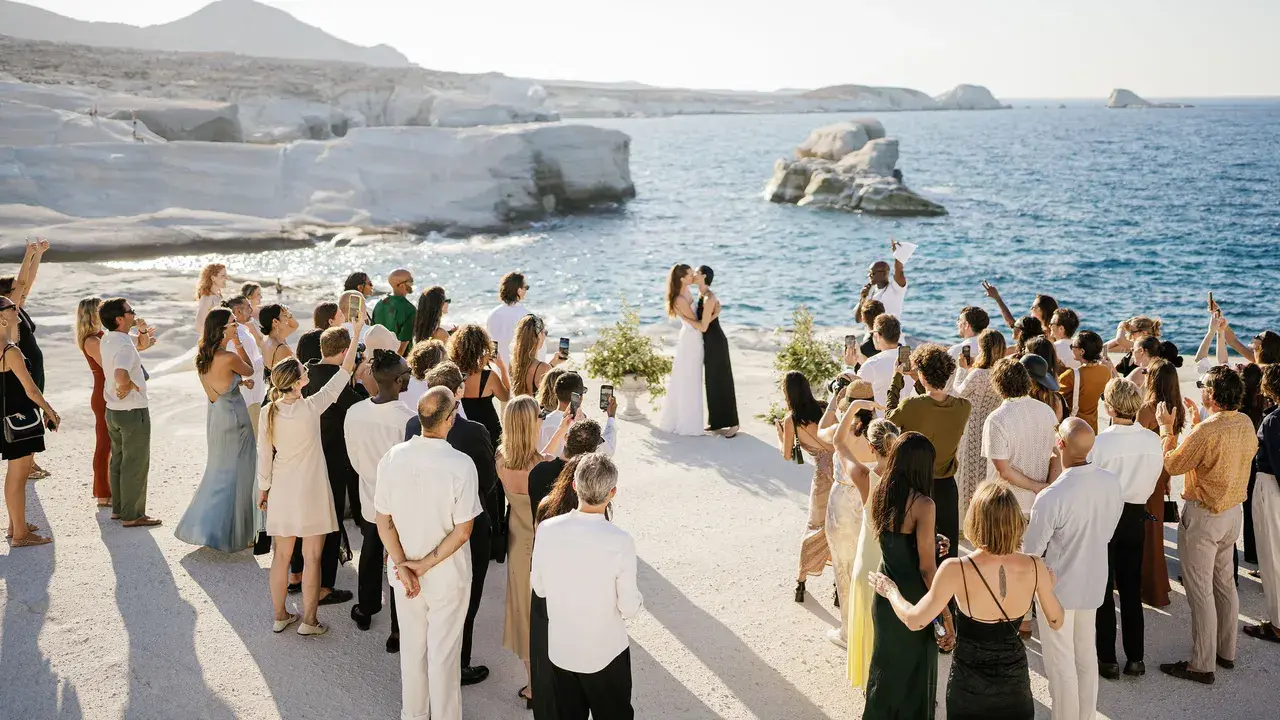
There’s nothing quite like exchanging vows with ocean waves providing the background music and soft sand beneath your feet. The coastal breeze gently lifts your hair. The sunlight turns a warm golden shade. All of a sudden, the usual bridal fashion guidelines seem distant and less important. A Beach Wedding Dress has to accomplish far more than simply appearing attractive. It must cope with heat, moisture in the air, strong gusts, and grains of sand while still allowing you to move with ease and create stunning photographs.
This full pillar resource fills every gap that ordinary product lists leave behind. Inside you will discover the fabrics that genuinely perform in outdoor conditions, body shapes ranked according to real practicality, location advice focused strongly on Europe, the latest 2026 directions, styling suggestions, money-saving ideas, and a straightforward step-by-step method. Whether you are organising a romantic ceremony along the Amalfi Coast, a windswept private moment in the Scottish Outer Hebrides, a classic celebration on the French Riviera, or a tropical journey further away, you will finish this guide knowing precisely how to select the ideal beach bridal gown.
Seaside weddings continue to grow in popularity throughout Europe and around the world because they blend natural splendour with a calm yet refined atmosphere. The correct dress supports that atmosphere rather than battling against it. Let’s begin right away and ensure your dress feels every bit as free and lovely as the surroundings themselves.
Why Beach Wedding Dresses Differ from Traditional Gowns
Conventional ballroom or church dresses are designed for indoor spaces that offer air-conditioning and smooth flooring. They frequently contain firm internal supports, numerous layers of tulle, dense beadwork, and extended trains that look impressive on polished marble. Those identical features turn into difficulties the instant you place your feet on sand or confront a sea breeze.
On the shoreline, a lengthy train gathers sand and water. Firm bodices can feel constricting and overly warm. Rigid materials push against the wind and create clumsy motion. A genuine beach wedding dress concentrates on alternative qualities:
- Light and airy construction
- Ability to move freely across uneven surfaces
- Ability to withstand wind and ocean spray
- Simple packing for trips to distant locations
- A relaxed, romantic appearance that cooperates with nature instead of opposing it
The intention is purposeful comfort — not a reduced bridal appearance. Many of the most unforgettable European seaside ceremonies feature gowns that feel light and fluid yet still appear distinctive and thoughtfully selected. Picture selecting clothing for an extended stroll beside the ocean rather than for a formal indoor gathering. Comfort and beauty support each other perfectly.
Best Fabrics for Beach Wedding Dresses
Selecting the fabric is the single most critical choice you will face. The suitable material keeps you comfortable, moves gracefully, and recovers effectively from outdoor conditions. Let us examine the leading choices in straightforward language.
Top-Performing Fabrics
Chiffon
This material is extremely light and highly air-permeable. It dries rapidly after contact with ocean spray, captures the breeze in an attractive manner, and records wonderfully in photographs. Chiffon stands as the premier option for the majority of beach wedding dresses along Mediterranean and Atlantic shores. If you desire one fabric that succeeds almost every time, begin with this one.
Lightweight Lace
Lace appears romantic and delicate when applied carefully — particularly on the upper section or sleeves. Steer clear of thick or heavily decorated versions because they collect sand and increase weight. Soft French or Chantilly-style lace performs especially well in European coastal environments. It supplies detail without adding bulk.
Crepe or Stretch Crepe
This material feels smooth, drapes attractively, resists creasing, and remains cool against the body. It suits modern slip or column styles perfectly. Numerous Scandinavian and Northern European brides prefer clean outlines, and crepe provides that appearance while remaining practical.
Organza
Organza feels crisp yet remains light. It supplies gentle volume without heaviness and maintains shape softly in a breeze. Employ it for A-line skirts that require modest structure without becoming burdensome.
Silk Charmeuse or Lightweight Satin
These materials feel luxurious for slip dresses and bias-cut designs. Select thinner weaves that avoid clinging in moist conditions. They reflect golden-hour illumination beautifully and appear refined against the ocean.
Linen Blends or Cotton Voile
These options are extremely air-permeable and ideal for casual or free-spirited looks. They prove popular for informal beach gatherings in Spain, Portugal, and the Greek islands. They maintain coolness even during hot periods.
Fabrics to Avoid or Use Cautiously
Heavy satin, dense layered tulle with under-skirts, velvet, thick beadwork, and firm mikado retain warmth, attract sand, and restrict motion. They can also appear excessively formal against a natural coastal background. Reserve those materials for indoor or highly formal occasions.
Helpful suggestion: Combine a lace or embroidered upper section with a chiffon or crepe lower section. You obtain romance and detail above while keeping the hem practical and light where it contacts the sand.
Fabric Comparison Table
| Fabric | Breathability | Weight | Best For | Watch-outs |
| Chiffon | Excellent | Very light | Most beach settings | May need lining for opacity |
| Lightweight lace | Good | Light | Romantic & European coastal | Heavy versions trap sand |
| Crepe | Very good | Light | Modern slip & sheath styles | Heavier crepes can feel warm |
| Organza | Good | Light | Soft volume & A-line skirts | Can rustle in strong wind |
| Silk charmeuse | Moderate | Light | Elegant slip dresses | Wrinkles & can cling |
| Linen blends | Excellent | Light | Casual & boho looks | Can crease easily |
| Heavy satin | Poor | Heavy | Avoid for beach | Heat & sand adhesion |
This chart allows quick comparison of choices. Select according to your venue temperature and the amount of movement you anticipate.
Top Beach Wedding Dress Styles & Silhouettes
Below appear the most successful shapes, ordered by how effectively they function on sand and in wind. These suggestions stem from what genuinely succeeds along European coastlines and popular international locations.
Flowy Chiffon A-Line
This shape flatters nearly every figure and proves highly practical. The skirt travels with the breeze, the outline suits most body types, and it records beautifully against sea and sky. It continues as the safest and most favoured selection for the majority of beach Ceremonies. If you seek one dependable choice, this is the one.
Boho Lace with Soft or Bell Sleeves
This look feels romantic and free-spirited without resembling a costume. Soft lace and gentle volume suit relaxed Mediterranean, Portuguese, and Greek island celebrations especially well. It carries a natural, effortless appeal.
Minimalist Slip or Sheath in Silk or Crepe
Sleek, contemporary, simple to pack, and cooling. This shape suits sunset ceremonies, formal beach resorts, or modern Northern European preferences that favour clean lines. It feels refined without unnecessary complication.
High-Low or Tea-Length
These practical hems remain cleaner while still providing movement and visual appeal. They function excellently for soft sand, dancing, and informal European coastal weddings. You can walk and dance freely without concern for the hem.
Empire Waist
The elevated waistline produces a long, flowing outline that feels light and accommodating in heat. It flatters many figures and works for both casual and elegant occasions. Numerous brides discover it remains comfortable throughout the entire day.
Lightweight Fit-and-Flare
This provides shape with sufficient release through the skirt for comfortable walking on sand. It represents a useful middle point between structure and fluidity. You obtain a flattering fit without restriction.
Two-Piece or Crop-Top + Skirt Sets
These appear fashion-forward and cooler in tropical warmth. They appear increasingly at stylish European destination weddings and among younger couples seeking a modern alternative. They also supply choices after the ceremony concludes.
Off-the-Shoulder or Halter with Flowy Skirt
These romantic necklines remain secure when constructed properly. They prove popular for warmer Mediterranean climates and display a little skin in an attractive manner.
Lightweight Tulle A-Line or Soft Ballgown
Volume remains possible on the beach provided the layers stay airy and unstructured. Select this only when the fabric is genuinely light. Heavy versions will contest the wind and heat.
Mermaid and heavily structured shapes can succeed on firmer surfaces such as resort terraces or boardwalks, yet they frequently encounter difficulty on deep soft sand. Remember that point when making your selection.
How to Choose the Perfect Beach Wedding Dress
Follow this practical sequence to sidestep common errors. Each stage builds upon the previous one so the decision process feels clear and straightforward.
Assess Your Exact Venue and Climate
Soft sand at the water’s edge behaves differently from a cliffside terrace, a resort boardwalk, or a sheltered bay. Wind strength and temperature matter more than the attractive postcard image. Ask yourself: Will the day be hot and moist? Is the wind powerful? Is the surface soft or firm?
Prioritise Fabric and Overall Weight
If temperatures regularly climb above 25–28°C with moisture present, select chiffon, crepe, or linen blends. These maintain comfort for longer periods. Heavy materials will leave you feeling sticky and fatigued.
Choose a Silhouette That Allows Mobility
You will walk across uneven ground, stand for photographs, dance, and possibly remain barefoot. Examine movement carefully. Lift your arms, sit down, and take several steps. The dress should travel with you rather than oppose you.
Decide on Length and Train Thoughtfully
A short train or no train usually proves safest. Detachable trains supply drama for formal portraits without the practical difficulties during the ceremony. Consider how much sand you wish to manage.
Consider Packing and Travel Needs
Destination weddings occur frequently across Europe and beyond. Lightweight, crease-resistant fabrics travel far more successfully. You do not desire a wrinkled result upon arrival.
Match Your Personal Style and the Overall Dress Code
Casual, free-spirited, elegant minimalist, or romantic lace all succeed on the beach when the fabric and cut are appropriate. Remain faithful to what makes you feel confident and joyful.
Try the Dress with Realistic Movement
Walk, sit, raise your arms, and, if possible, examine the dress in a light breeze. Observe how the hem behaves. This stage reveals difficulties before the important day arrives.
Plan Undergarments and Accessories Early
Strapless, low-back, or sheer styles require particular solutions. Do not postpone these choices until the final fittings. Suitable undergarments make the entire appearance feel secure and comfortable.
Destination-Specific Beach Wedding Dress Recommendations
European coastlines present enormous variety; therefore, matching the dress to the location improves both comfort and photographs.
Mediterranean
These locations remain warm, frequently moist, with attractive light. Slip dresses, soft A-lines, empire waist, and lightweight lace in chiffon or crepe perform best. Secure necklines assist with afternoon breezes. The aim is to stay cool while appearing elegant against the bright sea.
Atlantic & Northern Coasts
Cooler temperatures and stronger winds occur commonly. Structured A-lines, fit-and-flare styles with secure straps or halters, and the possibility of light sleeves or a wrap function well. Slightly more substantial fabrics can still feel suitable here. Comfort in the wind holds great importance.
Resort Terrace or Boardwalk Settings
Greater flexibility exists here because the surface remains stable. Sheath, column, or even light volume styles succeed. You possess more opportunity to explore structure.
Tropical Destinations Outside Europe
Select slip, sheath, empire, or soft free-spirited styles in the lightest fabrics. Avoid heavy layers and long sleeves. Heat and moisture demand the coolest possibilities.
Beach Wedding Dress Trends
Present directions remain practical while offering fresh appearances:
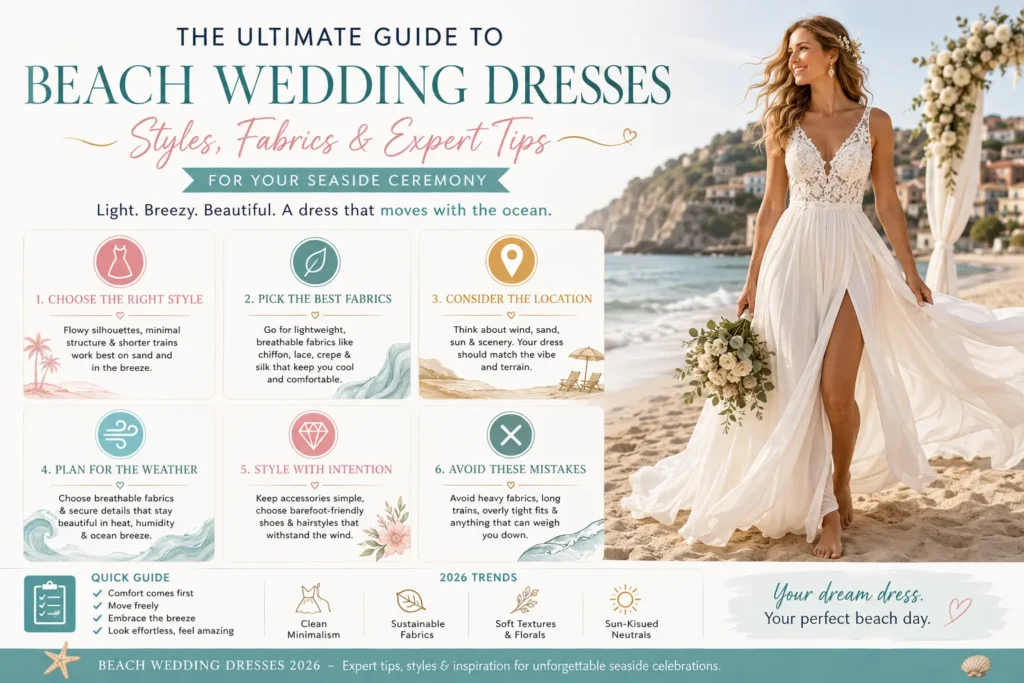
- Minimalist slip dresses and clean column outlines
- Soft colour (champagne, blush, warm ivory, and subtle tonal variations) alongside unexpected non-white choices
- Botanical, fern, or tropical-inspired lace and embroidery
- Convertible and multi-way designs that adjust from ceremony to reception
- High-low and tea-length practicality
- Sustainable and lightweight natural-fibre blends
- Statement open backs paired with simple fronts
- Free-spirited elements refined with modern tailoring rather than heavy fringe or excess volume
These directions travel successfully across European and international beach settings. They maintain focus on comfort and natural beauty.
Accessories, Shoes, Hair & Styling for Beach Brides
The correct finishing details complete the appearance without generating difficulties.
Shoes
Barefoot, flat sandals, or low wedges and espadrilles represent the most practical selections. Traditional heels sink into sand and create instability. Keep an attractive pair of flats nearby for walking to and from the beach.
Hair
Loose waves, low chignons, and braided styles hold up best against moisture and wind. Flower crowns, simple pearl pins, or delicate hair vines complement coastal light without contesting the elements. Avoid styles requiring numerous pins or heavy product.
Veils
Fingertip length or shorter works for photographs. Many European beach brides omit a traditional veil entirely in favour of a hair vine, comb, or nothing at all. Wind can transform a long veil into a kite.
Jewellery
Keep pieces light and refined — delicate pearls, fine gold, or subtle shell-inspired details. Heavy or dangling jewellery can catch the wind and feel irritating.
Undergarments
Select seamless, breathable options matched carefully to the neckline and back. Silicone cups or adhesive solutions frequently function better than traditional bras for strapless or low-back designs. Test them with the dress before the day arrives.
Budget Guide
Seaside weddings frequently permit greater flexibility than formal ballroom events, which can assist budgets.
- Accessible range — High-street and online choices offer surprisingly good quality in lightweight fabrics for informal or casual coastal celebrations.
- Mid-range — Specialty beach-oriented bridal designers and accessible bridal lines deliver excellent fabrics, construction, and fit.
- Luxury and custom — Designer and made-to-measure pieces supply superior materials, perfect fit, and unique detailing.
Many couples successfully employ non-bridal white or ivory dresses for relaxed European beach weddings and redirect savings toward other elements of the day. Always place fabric performance and movement above label prestige. A comfortable, beautiful dress holds greater importance than the name inside.
Pros and Cons
Understanding the strengths and weaknesses assists you in choosing with confidence.
Lightweight Flowy A-Line / Chiffon Styles
Pros: Excellent movement, breathable, flattering on most figures, photographs beautifully, travels well.
Cons: Can appear sheer (needs good lining), less structure for those who prefer a more formal silhouette.
Minimalist Slip or Sheath
Pros: Cool, modern, highly packable, elegant against sunset light, easy to dance in.
Cons: Less forgiving of body shape without careful fit, can cling if fabric is too fine.
Boho Lace Styles
Pros: Romantic, distinctive, suits relaxed European coastal atmospheres, strong visual interest.
Cons: Lace can catch sand if dense; heavier versions reduce breathability.
High-Low or Tea-Length
Pros: Practical on sand, easy to move and dance, youthful and modern appearance.
Cons: May feel less traditional for formal expectations; requires confidence in the shorter length.
FAQs
Flowy A-line, slip or sheath, high-low, and soft boho styles in lightweight fabrics perform best across most coastal settings.
Chiffon is the top overall choice, followed by lightweight lace, crepe, organza, and silk charmeuse depending on the desired aesthetic.
Yes, for formal portraits, but a detachable or very lightweight sweep train is far more practical for the ceremony and movement on sand.
Absolutely. Tea-length, midi, and high-low styles are both stylish and highly practical, especially for informal or destination European celebrations.
Choose smooth fabrics, consider a shorter or bustled hem, have a helper available, and plan a second look or careful cleaning afterwards.
Conclusion
A Beach Wedding Dress should feel as free and beautiful as the setting itself. By focusing first on the right fabric, then on a movement-friendly silhouette, and finally matching both to your specific venue and personal style, you create a look that is comfortable, photogenic, and memorable.
European coastal celebrations — whether on the Amalfi cliffs, a quiet Portuguese beach, the French Riviera, or the windswept shores of Northern Europe — reward thoughtful choices that respect both the environment and the emotion of the day. The same principles apply to destinations further afield.
Take time with fittings that include realistic movement. Prioritise breathability and practicality without sacrificing the romance you want. When the fabric moves with the breeze and the silhouette allows you to walk freely across the sand, the photographs and the memories will reflect that ease.
Your perfect beach bridal gown is the one that lets you fully enjoy the moment — bare feet or soft sandals, sea air, and the person you love standing opposite you. Choose well, and the rest of the day will feel effortless.