The Ultimate Guide to Boho Wedding Dresses: Styles, Trends, How to Choose & Style Yours for 2026
Boho wedding dresses remain one of the most cherished selections for contemporary brides seeking romance without the constraint of rigid formalwear. If your imagination fills with soft sunlight filtering through branches, barefoot steps across grass or sand, fabric that flows with every motion, or a celebration that feels liberated and deeply personal, a boho wedding dress may prove the ideal match for your vision.
This aesthetic has evolved well beyond pure festival associations. The modern bohemian wedding dress presents itself as refined, gentle, and authentic to the individual. It adapts gracefully to garden gatherings in the English countryside, intimate rites within French château grounds, sunlit coastal events along the Spanish or Italian Riviera, vineyard observances in Tuscany, and calm outdoor assemblies across Scandinavia. The central principle stays straightforward: the gown should accompany your movement and integrate into your personal narrative rather than dominate it.
Within this extensive resource, you will discover precise definitions of a boho wedding dress, the historical origins of the style, the most favoured variations, practical methods for selecting the right option according to body shape and location, complete styling recommendations, the newest 2025–2026 directions, intelligent budget considerations, frequent errors to sidestep, and transparent responses to the questions brides raise most often. Whether you stand at the beginning of your search or already hold a refined shortlist, this guide aims to build both confidence and enthusiasm.
What Exactly Is a Boho Wedding Dress?
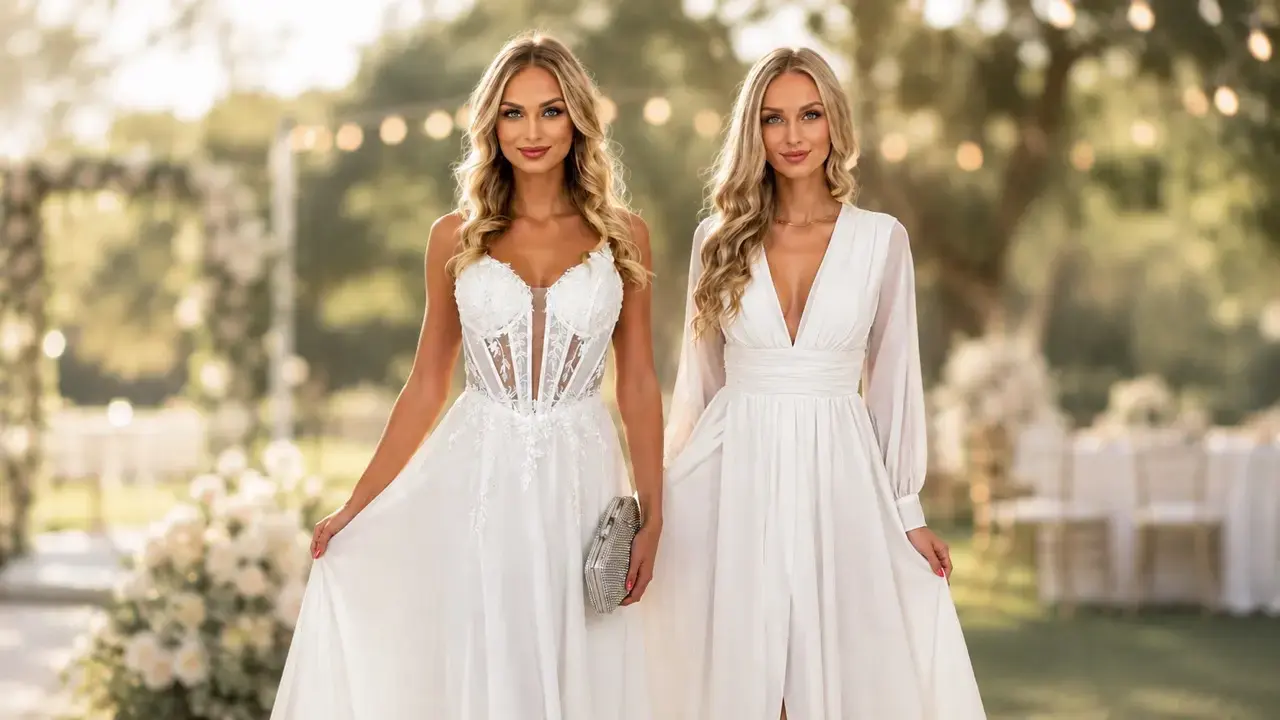
A boho wedding dress places priority on fluid motion, ease of wear, organic beauty, and individual expression. It steps away from rigid, heavily structured conventional gowns. In their place,e it employs soft contours and materials that react to air currents and your own steps.
The principal attributes you will commonly encounter include:
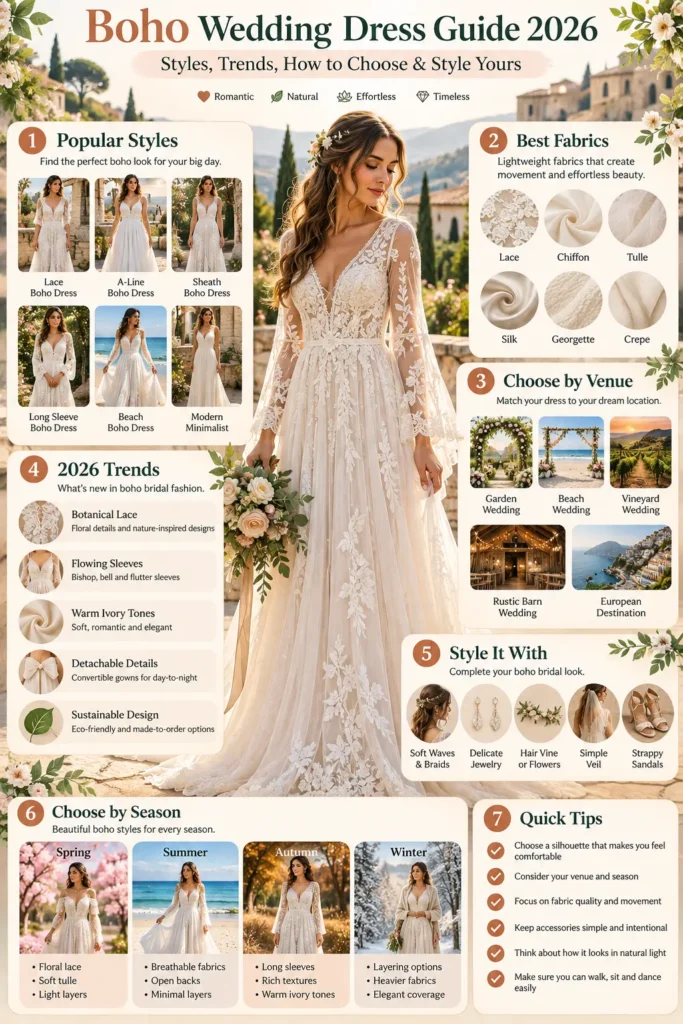
- Soft, undulating forms such as A-line, relaxed sheath, empire waist, or gentle fit-and-flare
- Lightweight textiles including chiffon, tulle, soft lace, georgette, and silk
- Nature-drawn elements such as floral lace, botanical embroidery, fringe, or subtle beading
- Romantic yet relaxed necklines and sleeves — off-the-shoulder, V-neck, flutter, bishop, or detachable styles
- Open or illusion backs, elevated slits, and components that convert from ceremony to celebration
The outcome is a garment that feels intimate and comfortable to wear throughout the day. It captures natural illumination beautifully and permits free dancing, walking, and rejoicing. A classic ballgown generates presence through volume and construction. A boho wedding dress generates presence through simplicity and genuine character.
Many brides discover that once they understand these core traits, the search becomes clearer and more enjoyable. The dress stops feeling like an abstract ideal and begins to feel like a practical, wearable expression of personal taste.
The Roots of Bohemian Bridal Style
Bohemian style did not originate on a bridal catwalk. Its beginnings lie in nineteenth-century Paris. Artists, writers, and independent thinkers sought garments that felt more liberated than the strict fashions of their era. They selected looser contours, gentle layers, and romantic accents. The term itself carries earlier associations with the Roma communities of Bohemia, yet the contemporary interpretation has developed into an independent vocabulary of liberty and inventive expression.
Artworks from the Pre-Raphaelite era depicted women in flowing robes with long undulating hair. These images contributed significantly to the dreamy visual language still valued today. Subsequently, the 1960s and 1970s introduced fringe, lace, floral motifs, and a definite rejection of inflexible conventions. Within bridal fashion, the approach gained broad acceptance during the 2010s as greater numbers of couples selected outdoor, destination, and highly individualised ceremonies.
The present-day boho wedding dress preserves the free-spirited essence while incorporating superior workmanship, softer, refined lace, and contemporary cuts. It no longer resembles a costume. It functions equally well within a historic European garden or upon a quiet coastal precipice. Understanding this background helps many brides feel more connected to the style and more confident in their eventual choice.
Key Characteristics That Define a Boho Wedding Dress
Fabrics That Create Movement and Texture
Lace continues to occupy the central position. Soft Chantilly, corded, or crochet lace possesses a natural and airy quality. Creators frequently combine it with chiffon or tulle skirts that intercept light and shift with each step. Bias-cut satin and silk Georgette provide a streamlined modern alternative. The essential requirement remains that the material must allow air circulation and fluid motion. Dense, inflexible satins typically conflict with the boho sensibility.
When evaluating fabric, run the material through your hands and observe how it falls. Light, breathable textiles that move independently create the signature ease associated with this style. Heavier constructions tend to restrict the free feeling that defines the aesthetic.
Silhouettes That Favour Ease
The finest boho wedding dress contours share a common quality: gentleness.
- Flowy A-line forms that glide over the figure and produce graceful motion
- Relaxed sheath or slip styles for a pure, uncomplicated appearance
- Empire waist constructions that elongate the frame and evoke a dreamy quality
- Soft fit-and-flare or trumpet forms that nevertheless permit free movement in the skirt
- Two-piece ensembles or reduced lengths suited to casual or coastal occasions
Trying multiple silhouettes remains one of the most valuable steps. Even if you feel certain about one shape, experiencing alternatives often reveals unexpected preferences that better match your posture and movement.
Details That Elevate Without Overpowering
Statement sleeves, floral or leaf lace, fringe along the hem, open or illusion backs, detachable components, and warm ivory or champagne hues in place of pure white all reinforce the aesthetic. Gentle sparkle proves more effective than dense glitter. The overall impression ought to appear thoughtful and artisanal rather than heavily ornamented for ornamentation alone.
Popular Boho Wedding Dress Styles
Lace Boho Wedding Dresses
Lace represents the classic expression. Graphic or floral lace applied over soft foundations generates texture and romance. These garments complement garden, woodland, or rustic European locations particularly effectively. The inherent softness of the lace prevents the appearance from becoming excessively formal.
Many brides appreciate how lace interacts with natural light, creating subtle patterns and depth in photographs without requiring additional embellishment.
Long-Sleeve Boho Wedding Dresses
Bishop, bell, flutter, or sheer lace sleeves contribute both beauty and practical coverage. They perform especially well during cooler seasons, autumn vineyard ceremonies, or for brides who desire greater coverage while retaining an airy character.
Long sleeves can also provide a sense of completeness and elegance that feels appropriate for more formal outdoor settings across northern Europe.
Boho Beach Wedding Dresses
Light chiffon or organza, open backs, slender straps, and elevated slits characterise this variation. Comfort in heat and wind takes precedence. These dresses prove ideal for Mediterranean coastal observances or island celebrations.
Practical considerations such as ease of movement on sand and resistance to light breezes make these styles particularly functional for destination events.
Vintage-Inspired and 1970s-Influenced Styles
Bell sleeves, fringe, soft elevated necklines with gentle plunges, and prairie-inspired elements produce a nostalgic yet wearable appearance. Crochet and graphic lace frequently feature in this category.
These designs often appeal to brides who value historical references while still requiring modern comfort and mobility.
Modern and Minimalist Boho
Clean sheaths or bias-cut slips featuring restrained lace panels, precise cutouts, or a single prominent sleeve offer a more fashion-oriented interpretation. This approach feels contemporary and less reminiscent of pure festival attire.
Minimalist versions suit brides who prefer understated elegance and who plan urban or contemporary venue celebrations.
Ethereal and Goddess Styles
Layers of soft tulle, Grecian draping, or gently gathered A-lines generate a floating effect. These dresses capture soft European illumination especially effectively in photographs.
The goddess interpretation often feels timeless and works across a wide range of outdoor European landscapes.
Approaches for Different Body Types and Preferences
Supportive bodices combined with flowing skirts, stretch lace, and empire or A-line shapes accommodate a broad range of figures. The inherent gentleness of the style renders it more adaptable and considerate than many conventional bridal constructions.
How to Choose the Perfect Boho Wedding Dress
Matching Silhouette to Body Type
Hourglass figures frequently achieve balance in soft fit-and-flare or A-line shapes featuring a defined waist. Petite frames generally favour empire lines or carefully proportioned shorter hems so the garment does not overwhelm the stature. Taller brides may enjoy dramatic sleeves, extended trains, or full maxi lengths. Curvier figures obtain support from structured or stretch bodices paired with flowing skirts. Athletic builds often appear harmonious with soft volume or gentle ruffles that introduce balance.
Considering Venue and Season
Beach or destination celebrations require the lightest possible materials and minimal construction. Garden or forest environments pair attractively with floral lace and soft ivory tones. Barn or rustic locations suit textured lace, fringe, or crochet. Cooler European conditions benefit from long sleeves, layering possibilities, and warmer colour tones.
Balancing Budget and Quality
Begin with material quality and fit rather than renowned labels. Satisfactory options exist across numerous investment levels. Made-to-order and semi-custom pieces frequently deliver superior personalisation compared with ready-to-wear alternatives. Determine which elements hold greatest importance for you — motion, sleeve character, back interest, or particular lace — and direct resources accordingly.
A Practical Decision Framework
| Factor | Priority Questions | Recommended Focus |
| Body & Comfort | How do you want to feel and move all day? | Soft structure + flowing skirt |
| Venue & Climate | Outdoor, indoor, warm, cool, windy? | Fabric weight and sleeve coverage |
| Personal Style | Romantic, minimal, vintage, modern? | Level of detail and silhouette |
| Photography | Soft natural light or more formal setting? | Texture and movement that catch light |
| Versatility | Ceremony only or all-day wear? | Convertible or detachable elements |
This framework helps organise decisions and reduces overwhelm during the selection process.
European Perspectives on Boho Bridal Style
Throughout Europe, the boho wedding dress adjusts readily to regional landscapes and preferences. In the United Kingdom and Ireland, garden and countryside settings favour soft floral lace and muted ivory. French observances, particularly in the South or surrounding historic estates, frequently select refined lace and elegant movement. Italian and Spanish coastal or vineyard weddings often employ lighter materials and open designs suited to warmer conditions. Scandinavian approaches incline toward cleaner lines, natural textures, and quieter accents. Outdoor celebrations across Eastern and Central Europe may incorporate richer textures while preserving the essential sense of liberty.
The aesthetic also aligns with the expanding European preference for personalised, less formal weddings that place experience at the centre. Numerous couples appreciate that a boho wedding dress can convey special significance without demanding the same degree of formality required by a classic structured gown.
Modern Versus Traditional Approaches
Traditional bridal frequently emphasises structure, volume, and the creation of impact solely through silhouette. Modern boho bridal generates impact through material quality, thoughtful accents, and the interaction of the gown with both environment and wearer. Neither approach holds superiority. They simply address distinct requirements. Many European brides currently combine elements of both — for instance, pairing a soft boho silhouette with a classic veil or understated elegant accessories — thereby producing an appearance that feels simultaneously current and personal.
Budget-Conscious and Elevated Options
Budget-conscious selections concentrate on clean contours, quality lightweight materials, and selective detailing. High-street and online sources, together with independent creators offering made-to-order pieces, can yield strong outcomes when fit receives careful attention. Elevated selections emphasise hand-finished lace, exceptional fabric motion, and distinctive construction that conveys an artisanal quality. In both categories, the guiding principle remains constant: the gown should enhance the bride’s natural presence rather than overshadow it.
How to Style a Boho Wedding Dress Completely
Hair and Makeup
Loose waves, soft braids, half-up arrangements, or low textured buns complement the aesthetic most effectively. Flower crowns remain available as an option, yet many contemporary brides favour simple vines, baby’s breath, or no floral addition for a cleaner outcome. Makeup typically appears luminous and natural — soft bronzes, terracotta, peachy cheeks, and a dewy complexion rather than heavy contour or intense colour.
Footwear and Accessories
Barefoot continues to feel emblematic for beach or garden environments. Strappy sandals, block heels, or boots for rustic venues place comfort in the primary position. Accessories achieve the best result when they appear deliberate and personal: delicate layered jewellery, a simple veil or hair vine, or one carefully selected belt. Excessive additions can diminish the easy, liberated quality.
Coordinating the Wider Party
Grooms frequently select linen or relaxed tailored ensembles in earthy or soft neutral tones. Bridesmaids often wear mismatched soft florals or complementary neutrals rather than identical formal dresses. Footwear permitting free movement assists the entire party in feeling aligned with the overall atmosphere.
2025–2026 Trends in Boho Wedding Dresses
Present directions favour superior craftsmanship over pure nostalgia. Delicate French and Chantilly lace receives preference over denser varieties. Botanical and floral embroidery that responds beautifully to natural illumination enjoys popularity. Fringe appears thoughtfully along hems or as a selective accent. Structured puff or off-shoulder sleeves frequently combine with fluid skirts. Bias-cut satin and sheer overlays generate modern romance. Warm ivory, champagne, cream, and soft blush tones appear more frequently than pure white. Convertible and detachable components supply practical flexibility. Sustainable and made-to-order methods continue to expand among European couples.
The prevailing mood remains less pure festival and more considered, romantic, and wearable across diverse settings.
Expert Tips and Common Mistakes to Avoid
Commence with the desired emotional experience rather than specific design particulars. Experiment with several contours even if you believe you already know your preference — boho wedding dresses frequently surprise. Examine material quality carefully and observe how the gown moves during walking and turning. Consider the complete day: will comfort endure for many hours, and will the dress photograph effectively under the anticipated illumination?
Frequent errors include selecting a garment excessively detailed for a simple setting, pursuing a trend instead of personal comfort, overlooking the back view (which appears prominently in images), and underestimating the importance of accurate fit. Another recurring misstep involves treating the dress as a costume rather than as clothing that should feel like an elevated version of one’s own style.
FAQs
Yes. The style has matured into a refined, enduring aesthetic rather than a fleeting trend. Its emphasis on comfort, movement, and personal expression continues to resonate with many couples.
Yes. Selecting elevated lace, a longer train, or a more structured bodice while retaining soft movement allows the style to adapt to formal settings without losing its character.
Warm ivory, champagne, cream, soft blush, and off-white tones feel most natural. Pure white can appear overly formal in contrast to the soft fabrics and organic details.
They work well for casual, beach, elopement, or reception looks. Many brides also choose a second dress for dancing or evening.
Focus on personalised details such as sleeve shape, specific lace placement, unexpected accessories, or subtle customisation. The strongest boho looks feel intentional rather than generic.
Conclusion
A Boho Wedding Dress constitutes an invitation to celebrate in a manner that feels authentic. It provides liberty of movement, a connection to natural beauty, and the opportunity to wear something that reflects personal style rather than rigid convention. Whether the ceremony unfolds in a peaceful English garden, beneath the illumination of a French estate, along a Mediterranean shoreline, or in any location that holds meaning, the appropriate gown will accompany your motion and capture a genuine expression of the day.
Begin by clarifying the desired emotional state. Then align fabrics, silhouette, and details with that state and with the practical requirements of venue and season. Trust the process of trying garments, prioritise quality of movement and material, and refrain from excessive accessorising. When the dress feels like an extension of yourself rather than a costume, you will recognise it as the correct choice.