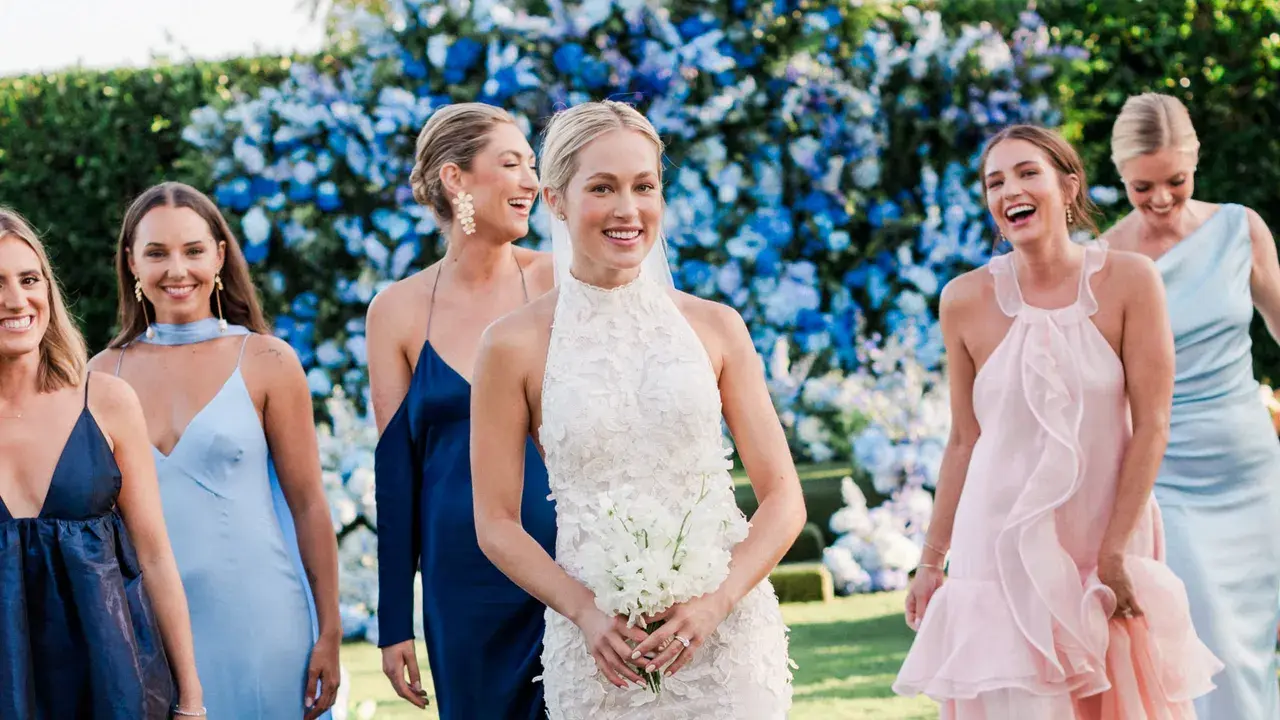
Introduction of Black Tie Wedding Guest Dress
Receiving a wedding invitation that says Black Tie can feel thrilling and a bit nerve-wracking at the same time. This stands as one of the most formal wedding dress codes. It ranks just beneath white tie. Guests are expected to attire themselves with genuine care and sophistication.
A thoughtful black tie wedding guest dress demonstrates respect toward the couple. It assists you in feeling self-assured and appearing refined. You never desire to rival the bride.
This comprehensive guide is composed for individuals attending nuptials throughout Europe. Picture stylish London townhouses, French châteaux, Italian villas, Spanish estates, German castles, Dutch canalside locations, Swiss mountain settings, and Scandinavian summer evenings. It also serves anyone who admires European elegance.
By the conclusion, you will understand precisely how to select and don a black tie wedding guest dress with assurance. Whether it involves a formal city ceremony, a rural estate wedding, or a destination festivity in Europe, this resource equips you fully.
What Does Black Tie Mean for Wedding Guests?
Black tie constitutes a formal evening dress code. Historically, it required men to wear a tuxedo paired with a black bow tie. For women in contemporary times, it signifies graceful, polished evening garments. Most frequently, this appears as a floor-length gown crafted from a sumptuous fabric.
A black tie wedding guest dress ought to feel deliberate and elevated. It ranks above cocktail or standard formal attire. Guests align with the atmosphere of the celebration: cultivated, glamorous, and considerate.
Black Tie vs Black-Tie Optional
Genuine black tie anticipates floor-length formality. Black-tie optional grants additional flexibility. A sophisticated midi or formal cocktail dress can prove acceptable. Nevertheless, numerous individuals still select a full-length gown to harmonise with the couple’s degree of formality. Always examine the invitation thoroughly. When uncertainty arises, incline toward greater formality rather than lesser.
Across Europe, the interpretation remains consistent. Local preferences emerge in colour, fabric weight, and outline. A London black-tie wedding may favour classic navy or black columns, while a summer wedding in Tuscany or the South of France frequently embraces lighter silks and gentler jewel tones.
In the United Kingdom, guests often lean toward structured silhouettes and deeper hues for city or country-house events. French gatherings may incorporate softer draping or delicate capes that add a romantic touch without sacrificing polish. Italian celebrations, especially those held in villas or countryside estates, welcome fluid movement in fabrics that catch the evening light. Spanish outdoor evenings sometimes permit warmer shades that complement the Mediterranean climate. German and Swiss winter weddings tend toward richer textures such as velvet that provide both warmth and visual depth. Dutch and Scandinavian settings balance formality with practicality, favouring clean lines that photograph beautifully against canals or Nordic landscapes.
Understanding these subtle regional differences helps you select a black tie wedding guest dress that feels appropriate wherever the celebration takes place. The core expectation stays the same: refined length, luxurious material, and an overall appearance that honours the occasion.
Essential Rules for Choosing a Black Tie Wedding Guest Dress
Adhere to these fundamental principles, and you will remain confidently within the dress code.
Do
- Select a floor-length gown or a structured mid-calf midi fashioned from elevated fabric.
- Prioritise luxurious materials such as satin, silk, chiffon, velvet, crepe, lace or subtle sequin.s
- Opt for rich, jewel or muted tones that suit evening occasions
- Seek refined details: soft draping, elegant necklines, interesting sleeves or gentle embellishment
- Combine the dress with formal footwear, polished jewellery and an evening clutch
- Consider season, venue temperature and the overall mood of the wedding
Don’t
- Don white, ivory, cream or any shade that might be mistaken for bridal
- Choose mini dresses, casual fabrics (cotton, linen, jersey) or heavily patterned daytime styles
- Appear underdressed with beachy, bohemian or daytime looks
- Select overly theatrical or attention-grabbing pieces that risk overshadowing the couple
- Neglect comfort — you will stand, sit, dance and move for many hours
These guidelines apply equally to formal celebrations in the UK, France, Italy, Spain, Germany, the Netherlands, Switzerland and further afield. Following them ensures your black tie wedding guest dress communicates respect and sophistication.
When evaluating a potential gown, hold the fabric between your fingers. Does it feel substantial and fluid rather than thin or stiff? Does the length graze the floor or hit mid-calf in a deliberate, structured way? These tactile and visual checks help confirm that the garment meets the elevated standard expected at a black-tie event.
Best Colours for a Black-Tie Wedding Guest Dress
Colour selection enables your ensemble to feel purposeful and seasonally suitable.
Classic and safest options
- Black
- Navy
- Deep emerald
- Burgundy or wine
- Aubergine
- Charcoal or soft charcoal grey
Modern and elegant alternatives
- Rich chocolate brown
- Soft metallics (champagne gold, muted bronze)
- Muted pastels for daytime or summer black-tie events
- Jewel tones that capture evening illumination
Seasonal colour guidance
- Autumn and winter: deeper tones and denser textures (velvet, heavier satin, brocade)
- Spring and summer: lighter satins, flowing chiffons and softer jewel or muted shades
Avoid bright neons, busy prints (unless the print is sophisticated and dark-toned) and anything too near the bridal colour palette. In many European environments, particularly formal city or château weddings, a refined solid or subtle tonal design appears more elegant than bold pattern.
Black remains a timeless favourite because it photographs cleanly and pairs effortlessly with almost any accessory. Navy offers a softer alternative that still reads formal while providing a flattering contrast against many skin tones. Deep emerald and burgundy introduce richness without overwhelming the overall look. Aubergine and charcoal deliver quiet sophistication that works especially well in cooler months or grand indoor venues.
When considering metallics, choose soft champagne or muted bronze rather than high-shine gold or silver that might appear costume-like. Muted pastels can succeed at summer or daytime black-tie celebrations provided the fabric remains luxurious, and the silhouette stays formal. The key lies in ensuring the colour feels intentional for evening rather than daytime casual.
How to Choose the Right Black Tie Wedding Guest Dress
Selecting the appropriate dress becomes simpler when you factor in Season, venue, body outline, and overall style preference.
By Season and Venue
Spring and summer
Lightweight silk, chiffon or fluid satin in softer or jewel tones performs admirably. Prioritise breathability and graceful motion. European garden parties, vineyard weddings and coastal festivities often favour these lighter fabrics while still preserving formal length and structure.
Imagine a late-afternoon ceremony among olive trees in Tuscany or a garden gathering at a French château. The air may still hold warmth, yet the occasion demands formality. A flowing chiffon gown in deep emerald or soft navy allows movement and comfort while meeting every expectation of a black-tie wedding guest dress.
Autumn and winter (or indoor / ballroom settings)
Velvet, heavier satin, structured crepe or subtle brocade in deeper colours feels fitting. Sleeves, capes or elegant wraps contribute practicality and polish for cooler European evenings.
Picture a candlelit ballroom in a German castle or a historic estate in the English countryside. The temperature drops after sunset. A velvet column in aubergine or burgundy provides both warmth and visual richness. Adding a soft stole or tailored cape elevates the look further while offering practical protection against the chill.
Destination or coastal black-tie
Choose flowing yet formal fabrics that continue to register as evening wear. Avoid anything resembling resort or beach-casual attire.
Even when the venue sits beside the sea or among vineyards, the dress code remains elevated. Fluid satin or silk in jewel tones maintains formality without appearing overly structured for an outdoor setting.
By Body Type and Silhouette
- A-line or fit-and-flare: Universally flattering; it skims the hips and creates balanced proportion.
- Column or sheath: Sleek, modern, and elegant; particularly effective on taller frames or for minimalist preferences.
- Ballgown or full skirt: Dramatic and formal; ideal for grand venues such as castles, ballrooms, or historic estates.
- Empire or softly draped styles: Softens the midsection and offers graceful movement.
Seek good support, adjustable features where helpful, and brands or retailers that provide inclusive sizing.
The finest black tie wedding guest dress is the one that fits well, feels comfortable, and flatters your natural shape while satisfying the formality of the occasion. Try the gown with the undergarments and shoes you intend to wear. Sit, walk, and raise your arms. These simple movements reveal whether the dress will remain comfortable and secure throughout a long evening of celebration.
Budget Considerations Without Compromising Elegance
Elegant possibilities exist across a wide spectrum of prices. Concentrate first on fabric quality, clean construction, and a flattering fit rather than brand names. Affordable pieces in satin or structured crepe can appear remarkably elevated when styled with refined accessories. Mid-range and investment pieces frequently deliver superior fabric hand-feel and finishing that reward repeated wear at future formal events.
Luxury selections prioritise exceptional materials and timeless design that can be worn for years. In every case, fit proves more important than price.
Begin by setting a realistic budget that includes not only the dress but also shoes, jewellery, clutch and possible outerwear. Many excellent options appear in the mid-range when you prioritise fabric and cut over logos. Look for clean seams, lined construction and a weight of fabric that drapes rather than clings or hangs stiffly. These details often signal quality more reliably than a famous label.
If you plan to attend several formal weddings, consider investing in one or two versatile pieces that can be restyled with different accessories. A classic navy column or a deep emerald A-line can serve multiple occasions when paired with varied jewellery and shoes.
European Perspectives on Black Tie Wedding Guest Style
European weddings frequently blend tradition with contemporary elegance. Guests often prefer refined silhouettes over excessive drama. In the UK, classic columns and jewel tones remain popular for formal city or country-house weddings. French and Italian celebrations may welcome softer draping, elegant capes,s or subtle romance in the fabric. Spanish and Southern European events sometimes permit warmer tones or lighter fabrics for evening outdoor settings. Northern and Central European winter weddings lean toward richer textures and deeper colours.
Regardless of country, the underlying principle stays consistent: appear polished, respectful and appropriate for an elevated evening celebration. Observing the venue and the couple’s overall style provides the best local cue.
In London, a structured satin column in navy or black often feels most appropriate for a formal townhouse or hotel ballroom. At a French château, a softly draped silk gown in deep burgundy or emerald can capture the romantic atmosphere while remaining fully formal. Italian villa weddings frequently favour fluid movement and elegant necklines that photograph beautifully against stone walls and cypress trees. Spanish coastal or estate celebrations may embrace slightly warmer tones that complement the evening light. German castle or Swiss mountain settings call for richer textures that provide both visual depth and practical warmth.
These regional nuances never override the fundamental requirements of length, fabric and refinement. They simply help you fine-tune your black-tie wedding guest dress so it feels harmonious with the specific celebration.
Modern vs Traditional Approaches
Traditional black-tie dressing emphasises floor-length gowns in classic colours and structured fabrics. Modern interpretations still honour length and luxury but permit greater personal expression through interesting necklines, soft draping, subtle metallic finishes or elegant jumpsuits in formal fabrics. Both approaches prove valid when executed with refinement.
A traditional choice might be a classic column in black satin with a simple boat neckline and minimal embellishment. A modern interpretation could feature soft asymmetrical draping, an elegant cape detail, or a formal jumpsuit in heavy crepe with clean tailoring. Either direction works provided the overall impression remains elevated and respectful.
Materials and Design Elements That Elevate the Look
The fabric largely determines whether a dress registers as black-tie.
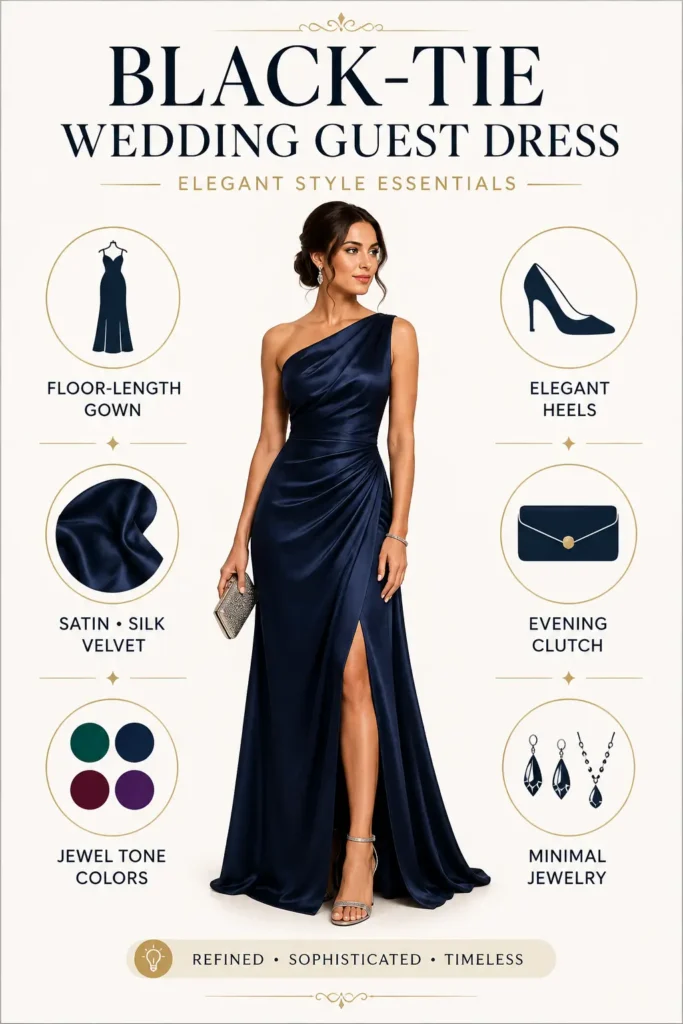
Preferred materials include:
- Satin and silk for liquid elegance
- Chiffon for soft movement
- Velvet for richness (especially autumn and winter)
- Crepe for clean structure
- Fine lace employed with restraint
- Subtle sequins or beading for evening light
Design details that enhance formality include soft draping, refined necklines (V, square, soft boat, elegant halter or off-shoulder), interesting yet balanced sleeves, and clean hemlines. Avoid overly sheer panels, extreme cut-outs, or anything that feels more nightclub than formal wedding.
Satin and silk create a fluid, luminous surface that catches candlelight and camera flashes beautifully. Chiffon adds gentle movement that feels especially graceful during dancing or outdoor moments. Velvet delivers depth of colour and a luxurious hand-feel perfect for cooler months. Crepe offers clean structure that holds its shape throughout a long evening. Fine lace can introduce delicate texture when used as an overlay or accent rather than as the primary fabric. Subtle sequins or beading catch the light without overwhelming the silhouette.
When examining a potential gown, check the lining, the quality of the seams, and the way the fabric moves when you walk. These practical details often distinguish a truly elevated black tie wedding guest dress from one that only appears formal at first glance.
Styling Your Black Tie Wedding Guest Dress
The right finishing touches complete the ensemble.
Shoes
Strappy heels, pointed pumps or elegant metallic sandals. Prioritise comfort for dancing and standing. In cooler European venues, consider closed-toe options or refined pumps.
Jewellery
Statement earrings, delicate layered necklaces, classic pearls or understated diamonds. Match the scale and formality of the dress. Less is often more when the gown itself is striking.
Clutch or bag
A structured evening bag or embellished clutch. Avoid large day bags or casual cross-body styles.
Outerwear
An elegant wrap, soft stole, tailored cape or refined coat for cooler evenings or outdoor moments. These pieces add polish and practicality at many European venues.
Hair and makeup
A polished updo or soft waves frames the face and complements formal jewellery. Makeup should feel glamorous yet wearable — enhanced eyes or lips, balanced skin, and a finish that lasts through the evening.
These elements transform a good dress into a complete, cohesive black-tie look.
Choose shoes that you can wear comfortably for several hours. A beautiful pair that causes pain after thirty minutes will distract from the celebration. Test the height and the sole. Consider a second, more comfortable pair that you can change into later in the evening if needed.
Jewellery should enhance rather than compete. If the gown features interesting necklines or embellishment, simpler earrings or a single elegant bracelet often create the most balanced result. A structured clutch keeps essentials secure without the bulk of a larger bag. An elegant wrap or cape not only provides warmth but also adds a polished layer that photographs beautifully.
Hair and makeup complete the overall impression. A polished style holds through dancing and embraces, while makeup that lasts ensures you look fresh from the ceremony through the final toast.
Comparison Table
| Preference | Recommended Silhouette | Ideal Fabrics | Best Season / Venue | Styling Notes |
| Classic & Timeless | Column or A-line | Satin, silk, crepe | All seasons, formal indoor | Minimal jewellery, elegant clutch |
| Romantic & Soft | Softly draped or A-line | Chiffon, fluid silk | Spring/summer, garden or villa | Delicate earrings, soft waves |
| Dramatic & Formal | Ballgown or full skirt | Satin, structured fabrics | Grand venues, winter evenings | Statement earrings, refined updo |
| Modern & Sleek | Sheath or structured midi | Crepe, heavy satin | City or contemporary venues | Architectural jewellery, clean lines |
| Cooler Weather | Sleeved or cape styles | Velvet, heavier satin | Autumn/winter, indoor or cooler outdoor | Wrap or stole, closed-toe shoes |
This table assists in matching personal style with practical considerations for European and international weddings.
Pros and Cons
Floor-length gown
Pros: Universally accepted as black-tie appropriate; creates elegant proportion; photographs beautifully.
Cons: Can feel less practical for very active dancing or certain outdoor terrain; may require hemming for perfect length.
Structured formal midi
Pros: Easier movement; modern alternative when executed correctly; often more re-wearable.
Cons: Only suitable if fabric and construction are elevated; risks reading as underdressed if too casual.
Formal jumpsuit
Pros: Contemporary and comfortable; excellent for those who prefer not to wear dresses.
Cons: Must be truly formal in fabric and cut; less traditional in some European settings.
Velvet or heavier fabrics
Pros: Luxurious and seasonally perfect for cooler months; excellent drape and depth of colour.
Cons: Can feel warm in heated venues or summer events.
Choosing according to the specific wedding context minimises drawbacks.
A floor-length gown remains the safest and most traditional choice for true black tie. It creates a long, elegant line that feels intentional in photographs and across a crowded ballroom. A structured formal midi can succeed when the fabric is luxurious, the hem hits mid-calf deliberately, and the overall construction feels elevated. A formal jumpsuit offers comfort and a contemporary silhouette provided the fabric and tailoring meet the same standard expected of a gown. Heavier fabrics such as velvet excel in cooler months but may prove less comfortable in warmer indoor venues.
Common Mistakes to Avoid
- Selecting a dress that is too short or casual in fabric
- Ignoring the exact wording on the invitation (black tie versus black-tie optional)
- Wearing white, ivory or a colour that clashes with the wedding palette
- Prioritising trend over comfort and fit
- Over-accessorising or under-accessorising
- Forgetting practical considerations such as weather, venue flooring or the length of the evening
A quick review of these points before purchasing or packing prevents most common errors.
Many guests underestimate the importance of fabric. A pretty print in cotton or linen may look lovely for a daytime garden party yet reads entirely too casual for black tie. Others overlook the exact invitation wording and arrive in a short cocktail dress when the couple expected full-length formality. White or near-white shades risk visual confusion with the bridal party. Prioritising the latest trend over a flattering, comfortable fit often leads to discomfort later in the evening. Accessories that are either too sparse or too overwhelming can throw the entire look off balance. Finally, practical details such as grass, cobblestones, temperature changes or long hours of standing deserve attention before the final decision.
Expert Tips for a Flawless Black Tie Look
- Always try the dress with the shoes and undergarments you plan to wear.
- Move in the dress — sit, walk and raise your arms — to check comfort and coverage.
- Consider the photography: solid colours and clean lines often photograph more elegantly than busy patterns.
- Plan a simple backup option (elegant wrap or second pair of comfortable shoes) for long celebrations.
- When attending multiple formal weddings, invest in versatile pieces that can be restyled with different accessories.
- Respect cultural and regional nuances: what feels right at a formal London wedding may differ slightly from a summer celebration in the Italian countryside, yet the core principles of length, fabric and refinement remain the same.
Additional practical advice includes checking the length with the exact heels you will wear, ensuring the neckline sits securely when you move, and confirming that any embellishment or draping does not shift uncomfortably. Taking a few photographs of yourself in the full outfit under different lighting can reveal details that are easy to miss in a fitting room. Planning a lightweight wrap or a second pair of shoes provides insurance against changing temperatures or tired feet. Versatile pieces that work across seasons and venues deliver better value over time.
FAQs
Yes, if it is a sophisticated, structured midi that hits mid-calf and is made from luxurious fabric. Floor-length remains the safest and most traditional choice.
No. Black is classic and versatile, but jewel tones, navy, burgundy, deep emerald, and muted shades are excellent and often preferred for visual interest and seasonal appropriateness.
Yes, if the jumpsuit is formal, full-length, made from a luxe fabric, and carefully tailored. Avoid casual or wide-leg day styles.
True black tie expects floor-length formality. Black-tie optional allows more flexibility, including elevated midis or formal cocktail dresses, though many guests still choose full-length gowns.
Match the formality of the dress: evening-appropriate heels or refined dressy flats, polished jewellery and a structured clutch or evening bag.
Conclusion
A black-tie wedding guest dress is more than clothing — it is a way of honouring the significance of the day and participating fully in a beautiful celebration. By choosing refined fabrics, appropriate length, flattering silhouette and thoughtful styling, you will look and feel elegant from the ceremony through the last dance.
Across Europe and beyond, the most successful black-tie guest looks share the same qualities: intention, quality and respect for the occasion. Select a dress that makes you feel confident, prioritise fit and comfort, and finish the ensemble with polished details. You will create lasting memories — and photographs — that reflect the joy of the day.